
Bridging Knowledge and Action: Environmental Challenges, Community Engagement, and Pedagogy
Mar
27
2026
Mar
27
2026
Description
Four scholars from UT Austin's College of Liberal Arts will explore how cross-disciplinary collaborations that bridge environmental change, community engagement, the collection of oral histories and memories, and critical reflections through writing and literature can help preserve landscapes, deepen understanding of local socio-ecological contexts, and support civic engagement and policy outcomes.
The panel will be followed by a public Butoh dance performance at 5:45 pm at UTMSI's Wetland Education Center (next to the Patton Center) by Dr. Rosemary Candelario of UT Austin’s Department of Theater and Dance.
Attendance at the panel is by invitation only; the aqueous Butoh dance performance is open to the public.
Speakers
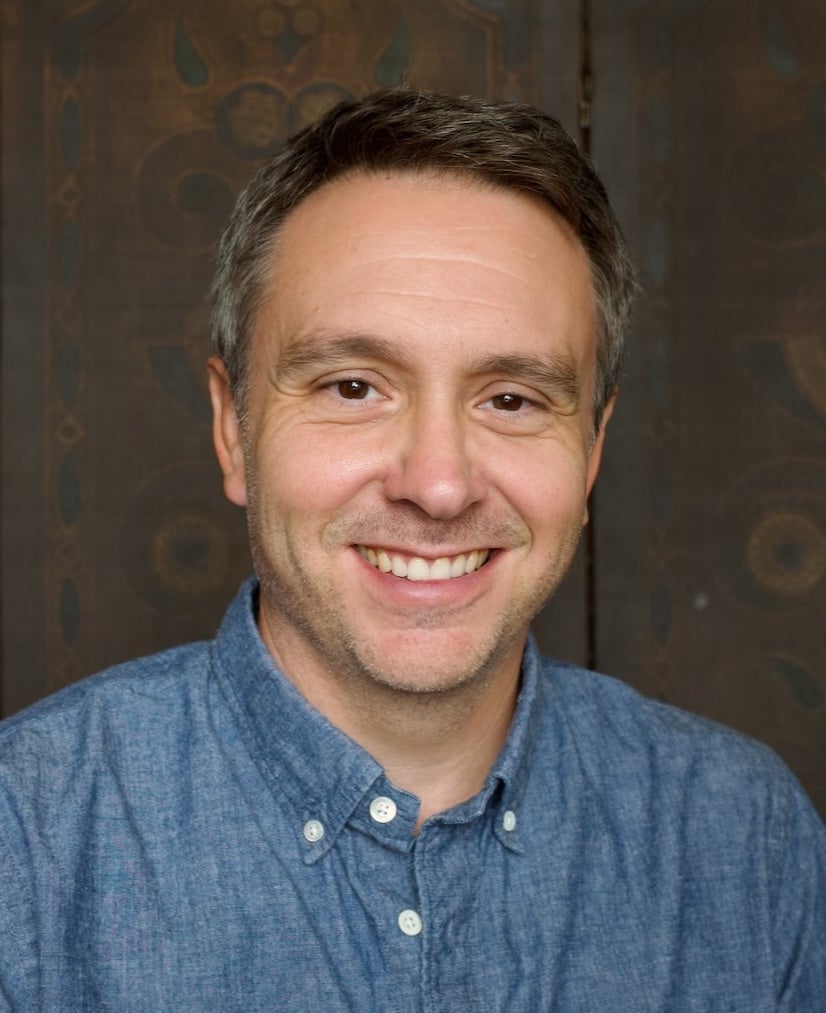
C.J. Alvarez: cjalvarez@austin.utexas.edu
Associate Professor, Department of Mexican American & Latina/o Studies
https://liberalarts.utexas.edu/mals/faculty/ca29356
C. J. Alvarez
C. J. Alvarez is a historian of borders and deserts. His first book, Border Land, Border Water: A History of Construction on the U.S.-Mexico Divide (Texas 2019) argues that the best way to understand the United States-Mexico border is by thinking about the built environment and the natural world together. His current book project, Another Kind of Clay: Adaptation and Maladaptation in the Chihuahuan Desert, frames our present-day environmental crisis in the context of the last 20,000 years of human occupation in the drylands of North America. He is an associate professor in the department of Mexican American and Latino Studies where he teaches classes about borderlands history, Native history, in Spanish colonial history, all with an eye toward environmental analysis. He is also the director of the Voces Oral History Center, one of the most important and longstanding Latino focused oral history projects in the country. Before he received his Ph.D. in history from the University of Chicago, he studied art history at Stanford and Harvard and continues to write for nonacademic art publications. Most of his intellectual and aesthetic preoccupations can be traced back to a childhood spent in southern New Mexico.
Abstract
Historical Fieldwork
The discipline of history is most often associated with dusty archives, old documents, and painstaking hours spent in solitude at an office desk. This presentation overturns the stereotypes and explains how historical research can be done outside and in collaboration with others. I take the three themes of the day one by one. To me, as a humanist, the biggest environmental challenge is not political or economic, but rather philosophical. My research is inspired by the ideas of ecocentrism, land ethics, and kincentric ecology. All of that translates to a view of the world that does not automatically assume that the human species is inherently superior or more important than everything else. Oral history (recorded interviews of people’s life stories) is the ultimate form of historical community engagement. The first oral historians understood that the archives can only tell us so much, so they went out in the world to probe the realm of memory and experience. Finally, I’m interested in the potential of true cross disciplinary pedagogy—scientists sharing fieldwork practices with humanities scholars in exchange for historical and interpretive context, pooling expertise to craft in depth interviews that can serve as material for future researchers of all backgrounds
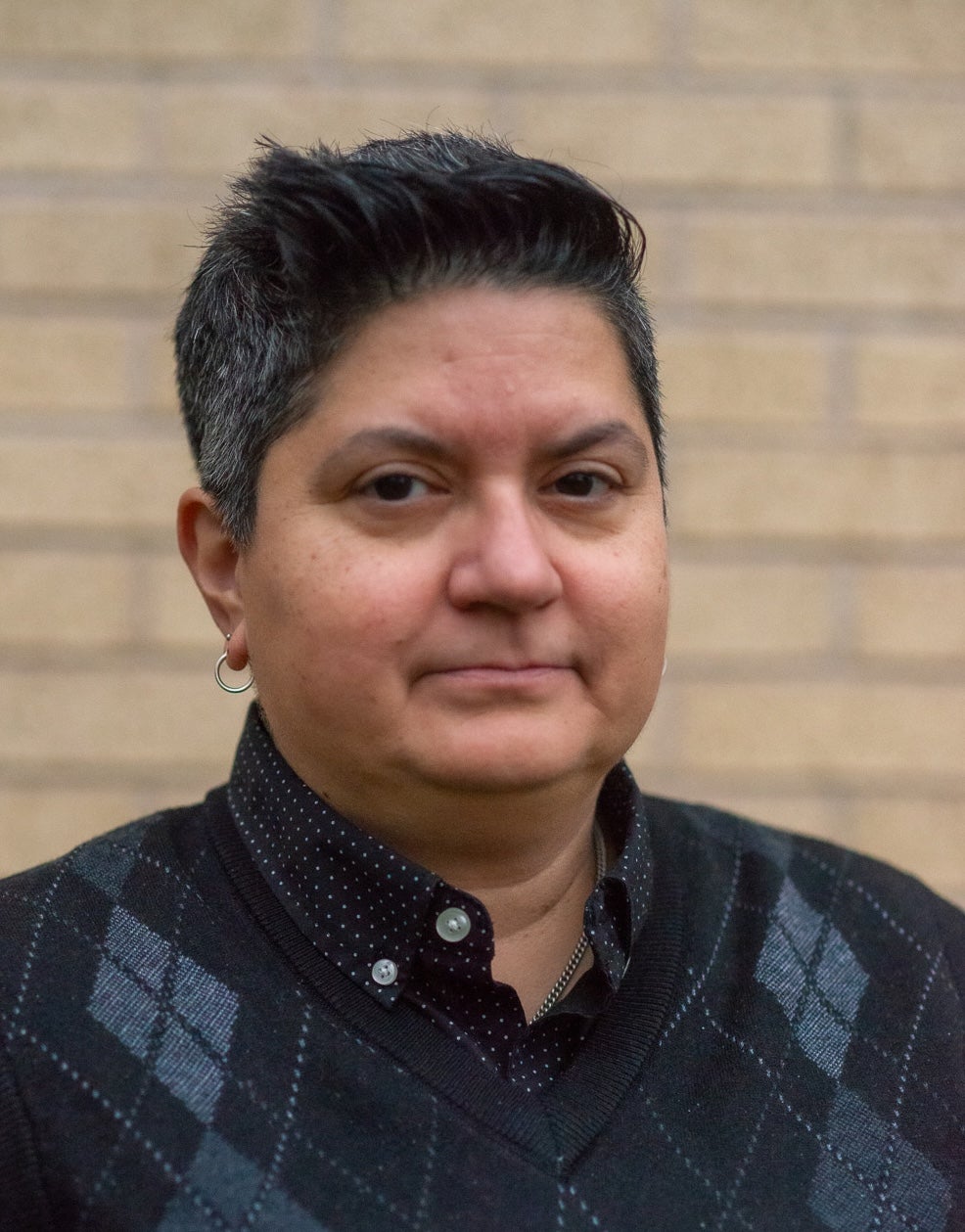
T. Jackie Cuevas: cuevas@utexas.edu
Associate Professor, Department of Women’s, Gender and Sexuality Studies
https://liberalarts.utexas.edu/wgss/staff/cuevasj
Jackie Cuevas
Jackie Cuevas is Associate Professor of English at the University of Texas at Austin. She is the author of Post-Borderlandia: Chicana Literature and Gender Variant Critique, which received Honorable Mention for the National Women’s Studies Association’s Gloria Anzaldúa Book Prize and was a finalist for a Lambda Literary Award. In 2018, Cuevas received the UT Regents’ Outstanding Teaching Award. In 2021, Cuevas was the founding Principal Investigator for Democratizing Racial Justice, a community-university collaboration funded by a $5 million grant from the Mellon Foundation. Cuevas is also the co-founder of Evelyn Street Press and a member of the Macondo Writers Workshop, founded by Sandra Cisneros.
Abstract
Literary Texas and the Blue Humanities
I will share my current research on ecocritical literature and cultural productions of the Texas Gulf Coast. Using canonical and contemporary examples of Texas ecocritical texts, I will discuss what we can learn from such literature and how place-based writing and critical regionalist interpretive frameworks can serve as pedagogical tools for developing Gulf ecoliteracy. I will also share examples of community-oriented initiatives from the Democratizing Racial Justice project and how we might glean possibilities for community-university collaborations with opportunities to cultivate new understandings of and connections with the Gulf region.

Megan Poole: megan.poole@utexas.edu
Assistant Professor, Department of Rhetoric & Writing
https://liberalarts.utexas.edu/rhetoric/faculty/mp53843
Megan Poole
Megan Poole is an assistant professor in the Department of Rhetoric and Writing whose interdisciplinary, community-engaged research and teaching examines how persuasion and knowledge-making occurs through more-than-discursive, sensory modes. Her work amplifies the importance of valuing ways of knowing that derive from bodily, lived experience and considers how coalitional spaces provide diverse approaches to solving problems in local communities. Her first book, Listening to Beauty: Stories of Sea, Sound, and Rhetorics of Science, with the University of Chicago Press, studies biologists' methods of listening in the field and brings into relief the aesthetics of scientific inquiry. She also co-created an ongoing environmental health literacy project—Air Justice—with grassroots activists, students, and health equity law scholars in Louisville, Kentucky, to make engaging with the science, health effects, and law of air pollution easier for public audiences. Now, through the “Ground Truth Initiative,” she gathers oral histories with communities living on the banks of watersheds to consider how human memories can help us remember natural environments and relate to how these places are changing in the era of climate crisis.
Abstract
Memory v. Method: Environmental Oral Histories of East Boggy Creek
How can memory shift method? More specifically, how can memories collected through oral history interviews in East Austin disrupt, extend, and pose important challenges to scientific methods that assess local environments primarily through quantitative assessments like samples of tree cores, water quality, soil nutrition? Hydrologists and dendrologists have studied the habitat and environmental conditions of East Boggy Creek for decades. Data from tree core samples reveal how urban development in the area decreases biodiversity as it increases salinity and heavy metal contamination in the watershed. And yet the trees talk not about what residents remember: how these waters once contained different types of fish, flowers, and sand; how the creek prospered before all the concrete.
Our “Ground Truth Initiative” aims to create an archive of environmental memory that challenges existing natural archives, juxtaposing hyper-objective data with the most subjective data around: memory. At stake is collecting and preserving memories and landscapes that would otherwise be lost.
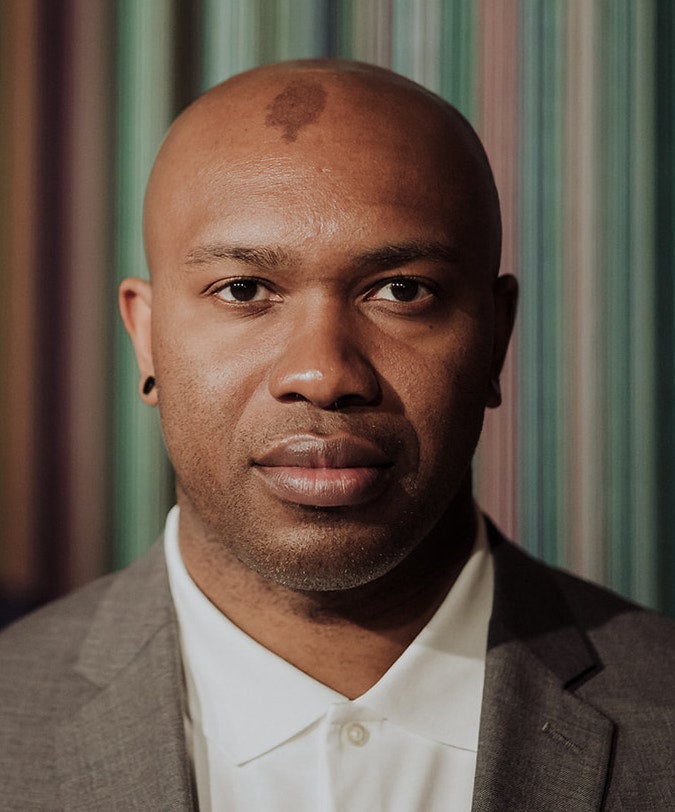
Donnie J. Sackey: donnie.sackey@austin.utexas.edu
Associate Professor; Associate Chair, Department of Rhetoric & Writing
https://liberalarts.utexas.edu/rhetoric/faculty/ds52465
Donnie Johnson Sackey
Donnie Johnson Sackey is currently an associate professor and associate chair in the Department of Rhetoric & Writing at the University of Texas at Austin, where he teaches courses in environmental communication, information design, and user-experience design. His research examines the dynamics of environmental public policy deliberation, environmental justice, and community-based participatory research, with particular attention to how communication practices shape civic engagement and policy outcomes. At UT Austin, he serves on the steering committee of the Polymathic Scholars Honors Program and contributes to the Bridging the Disciplines Smart Cities faculty panel. He is also a non-resident fellow with the Center on Global Energy Policy at Columbia University. His scholarship has appeared in Communication Design Quarterly, Community Literacy Journal, Present Tense, Rhetoric Review, Rhetoric Society Quarterly, Technical Communication Quarterly, and several edited collections. His forthcoming book, Undermining Risk and Technical Communication: Extractive Industry, Cascading Disaster, and the Global Climate Crisis (SUNY UP), will be available in July 2026.
Abstract
Expanding Understanding of Energy Literacy
Energy systems are among the most consequential infrastructures shaping environmental vulnerability, public health, and democratic participation—yet they remain largely invisible until crisis strikes. Drawing on research in energy justice and community writing, this presentation argues that environmental challenges such as utility disconnections, extreme weather deaths, peaker plant siting, and rising energy burdens are not merely technical failures but communicative and pedagogical ones. Energy infrastructures are discursive systems: bills, rate cases, shutoff notices, regulatory hearings, and assistance applications function as literacy sponsors that structure who can understand, contest, and reshape energy policy. Sackey proposes expanding “energy literacy” beyond individual conservation knowledge toward a justice-oriented framework grounded in access, participation, and institutional critique. Bridging knowledge and action requires community-engaged pedagogies that treat writing as design intervention—equipping students and communities to read, revise, and co-author the systems that power their lives. Through examples including community micro-hydro projects, cooperative solar initiatives, and nonprofit energy education models, he shows how distributed literacy practices can transform passive consumers into participants in shared governance. Ultimately, he argues that environmental pedagogy must cultivate not only awareness but collective capacity—linking rhetorical care, institutional accountability, and infrastructural redesign in pursuit of energy democracy.
These events contribute to the development of an undergraduate course titled Coastal Challenges and Change that will be taught by Dr. Sharon Herzka (Department of Marine Science), Dr. Rosemary Candelario (Department of Theater and Dance), and Dr. Rivka Eisner (anthropologist, UTMSI). Funding for these events is provided by the College of Fine Arts Community Engagement and Public Practice Seed Grant and a College of Natural Sciences Pathways Grant through the Office of STEM Education Excellence (STEMx).