
Departmental Seminar
Sep
18
2026
Sep
18
2026
Abstract:
Coastal flooding caused by hurricanes and tsunamis is among the most destructive natural hazards, placing growing coastal communities and ecosystems at increasing risk. Yet, coastal flood impacts are rarely controlled by a single process. Instead, they emerge from interactions among multiple hydrodynamic drivers and with natural and built features across a wide range of spatial scales. This seminar presents two recent research efforts aimed at better understanding these complex interactions. The first study investigates hurricane-induced compound flooding and introduces a game theory-based framework to quantify the spatial and temporal contributions of tide, storm surge, river discharge, and precipitation. Applications to Hurricanes Beryl and Harvey along the Texas coast demonstrate that the relative importance of individual flood drivers can vary substantially across both space and time, and that nonlinear interactions can even reduce the contribution of an individual driver under certain conditions. The second study examines flood processes at a much finer scale, focusing on interactions among extreme waves, floating debris, and coastal macro-roughness such as coastal forests. Using the Material Point Method, the study demonstrates that features typically associated with wave attenuation can also produce unintended consequences: debris trapped within vegetation or structural arrays can form temporary dams, increase wave reflection and local water levels, and amplify hydrodynamic loads on nearby structures. The findings highlight opportunities to move beyond conventional flood mapping toward a more process-based understanding of how extreme events interact with coastal landscapes, natural features, and infrastructure.
Biography:
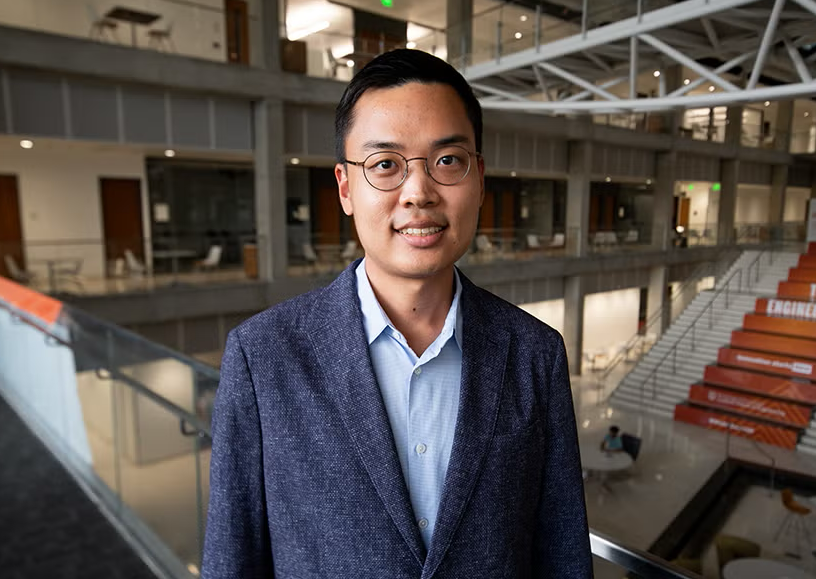
Jun-Whan Lee is an Assistant Professor in the Maseeh Department of Civil, Architectural, and Environmental Engineering at The University of Texas at Austin. His research focuses on compound flood risk, with particular attention to extreme events such as hurricane-induced flooding and tsunamis. He integrates machine learning, numerical modeling, and remote sensing to advance real-time forecasting and flood assessment. His work also explores nature-based solutions and multi-hazard risk modeling to strengthen community resilience. By bridging engineering, socioeconomic perspectives, and disaster risk management, Dr. Lee advances fundamental knowledge that connects human systems, infrastructure, and the environment to reduce flood risk. Dr. Lee earned his Ph.D. in Civil and Environmental Engineering from Virginia Tech in 2021, following B.S. (2012) and M.S. (2014) degrees from Hanyang University in South Korea. From 2014 to 2017, he was a researcher at the National Institute of Meteorological Sciences in South Korea. After completing his doctorate, he served as a postdoctoral associate at the Center for Coastal Studies at Virginia Tech before joining UT Austin.