New Study Clarifies What Plastics Become as They Weather in the Ocean
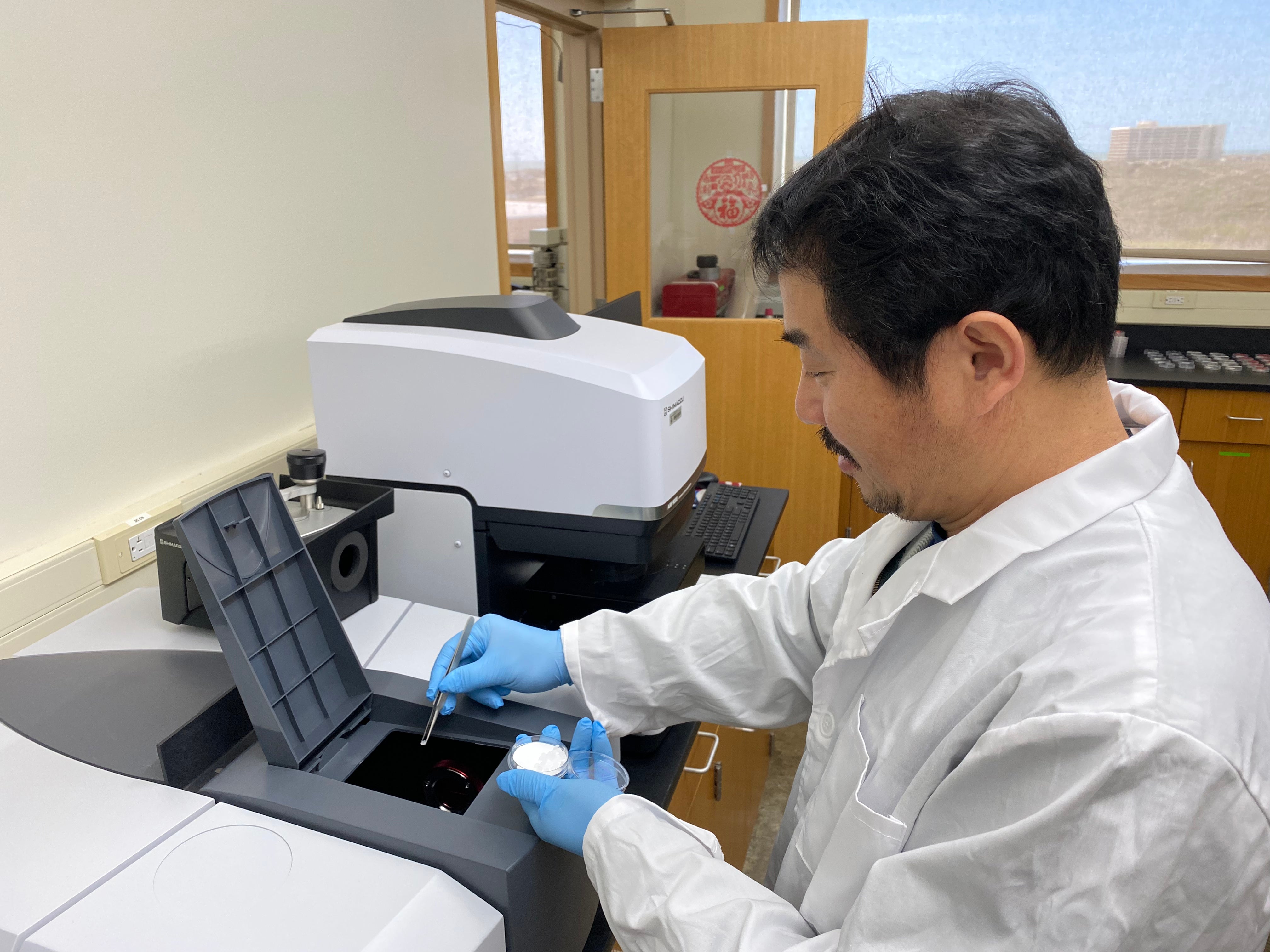
Dr. Zhanfei Liu, Professor at UTMSI and coauthor, adds a plastic pellet, or nurdle, to a Fourier-transform infrared spectroscopy for analysis. This instrument was used to detect changes in the surface chemistry of the plastic pellets, focusing on the formation of oxygen-containing functional groups. Credit: UTMSI
As many people in South Texas are aware, plastic, like the cushions on outdoor furniture, can dramatically break down when exposed to the sun. The same process is happening to plastic debris floating in the ocean. A new study released online this week in Marine Pollution Bulletin by scientists at The University of Texas Marine Science Institute, Drs. Xiangtao Jiang and Zhanfei Liu, and Coastal Carolina University, Dr. Kaijun Lu, examine how sunlight breaks down plastic pellets and what chemical byproducts are created, how the pellet density influences the process, and if different types of plastic pellets break down differently.
What they found was surprising: the type of plastic matters, but so does where it is in the water column. There are two main types of raw plastic pellets used to create products: polyethylene, like that found in bottle caps, and polycarbonate, like that found in eyeglass lenses.
Polycarbonate plastic pellets have a chemical structure that makes them more prone to degradation, but the researchers found the opposite outcome in this study. It was polyethylene plastic pellets, not the polycarbonate, that broke down faster. In fact, polyethylene broke down and released 18 times more dissolved organic carbon than the polycarbonate plastic pellets. The researcher determined that this striking difference was driven largely by where the pellets resided in the water column. Polycarbonates are denser and sink, making the degradation from sun less, plus the chemical structure of polycarbonates makes them more prone to coloring when degraded, which may have provided a protective and additive impact to further degradation.
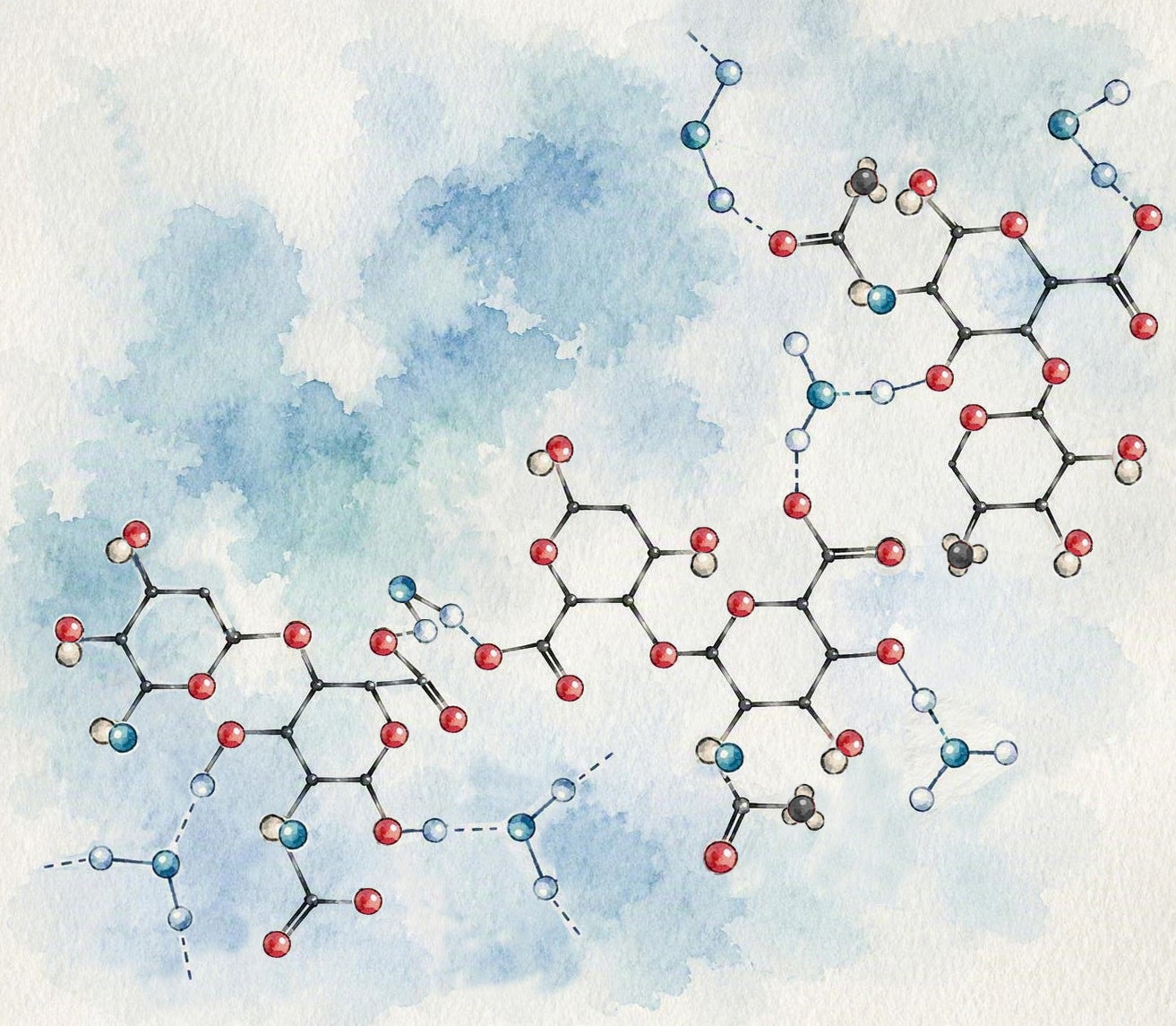
In addition, the research discovered that both the plastics, polyethylene and polycarbonate, when exposed to sunlight did not break down into smaller nanoplastics, but rather they both released small, dissolved chemical compounds. Based on their rough estimate, if only photodegradation, these nurdles would last several hundred years!
These findings are important because prior to this study scientists didn’t understand the mechanism or rates for plastic degradation or exactly what kinds of chemical compounds or structures are released as plastics degrade. “Polyethylene is far more common in marine debris, and the degradation and information for those byproducts will help predict the environmental impacts of plastic pollution,” said Dr. Zhanfei Liu, coauthor and Professor at UTMSI.
The study was completed with raw plastic pellets to reduce any unforeseen factors. Raw pellets are prone to becoming debris during the manufacturing process because they are small, float, and are lightweight. Although the experiments were done on raw pellet material, the results are likely similar for microplastic marine debris as well. Collectively, this research shows that sunlight causes plastics to release small, dissolved chemical compounds rather than breaking directly into tiny plastic particles, and that both the plastic type and position in the water play a critical role. The nurdles will last a long time in the environment. This helps scientists better understand what plastics turn into as they weather in the ocean and how those byproducts may affect marine life and ecosystems.
This research was supported by Matagorda Bay Mitigation Trust and Texas Gulf Coast Research Center.