How invasive rats rewire coral reef food webs creating winners and losers
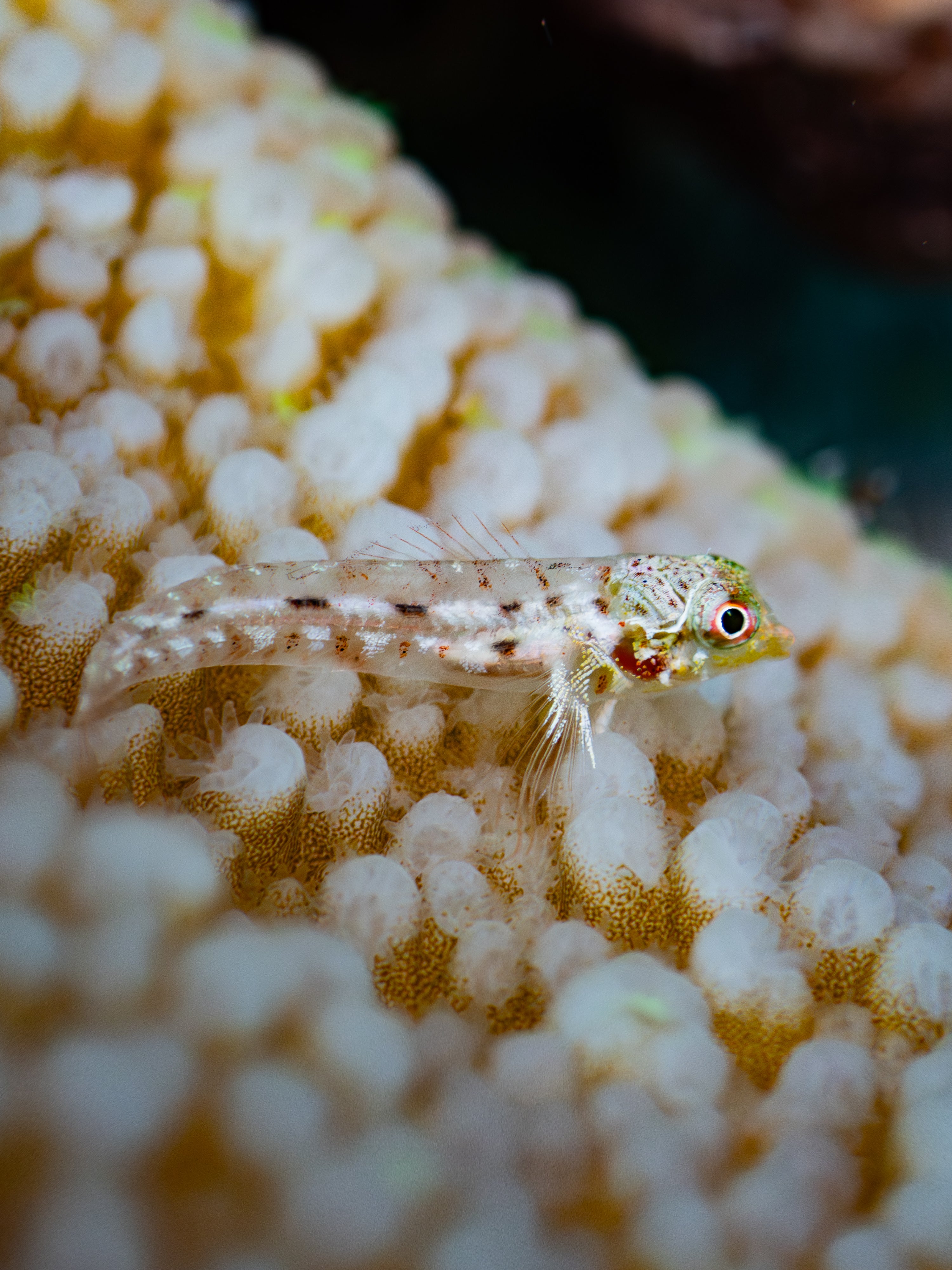
A small triple fin (family Tripterygiidae) perched on a coral. Triplefins and gobies are among the most numerous reef fishes, and near islands with healthy seabird populations, these fishes appear to thrive. Credit: Kathryn S. Christian.
Invasive rats on tropical islands are creating winners and losers among the tiny underwater animals that inhabit surrounding coral reefs.
And scientists in a study released recently in Ecology say that these changes can rewire entire food chains on the reefs.
The tiny fish and invertebrates that live at the bottom of the sea on coral reefs are known collectively as ‘cryptofauna’. These creatures are often overlooked and little studied, yet they play a vital ecological role and represent a cornerstone of energy transfer on coral reefs.
Led by researchers at Lancaster University and The University of Texas at Austin, a team of marine scientists studying these tiny critters on reefs around remote islands in the Indian Ocean have discovered that populations are much different around islands infested by invasive rats compared to reefs around islands without rats.
Reefs surrounding islands free of rats are dominated by tiny ‘cryptobenthic’ fish species, such as gobies and triplefins, whose biomass was more than five times greater than that of small invertebrates. Around rat-infested islands, however, researchers found a much higher proportion of small invertebrates, such as coral crabs, porcelain crabs, and snapping shrimps, with cryptobenthic fish and invertebrate biomass being nearly equal around these rat-infested islands.
The key to how rats are able to impact these marine creatures is found in what they are doing to seabird populations on the islands they have infested. Invasive rats, which arrived as stowaways on ships hundreds of years ago, have decimated seabird populations on the islands – eating their eggs, chicks, and sometimes even adult seabirds.
On the islands without rats, the density of seabird populations is a staggering 760 times greater. Seabirds play a vital role in recirculating nutrients from the open ocean where they feed, to the islands where they roost, breed and nest. Their droppings, known as guano, are rich in nutrients that when washed off the islands into the sea, act as a natural fertiliser for the surrounding coral reef ecosystem.
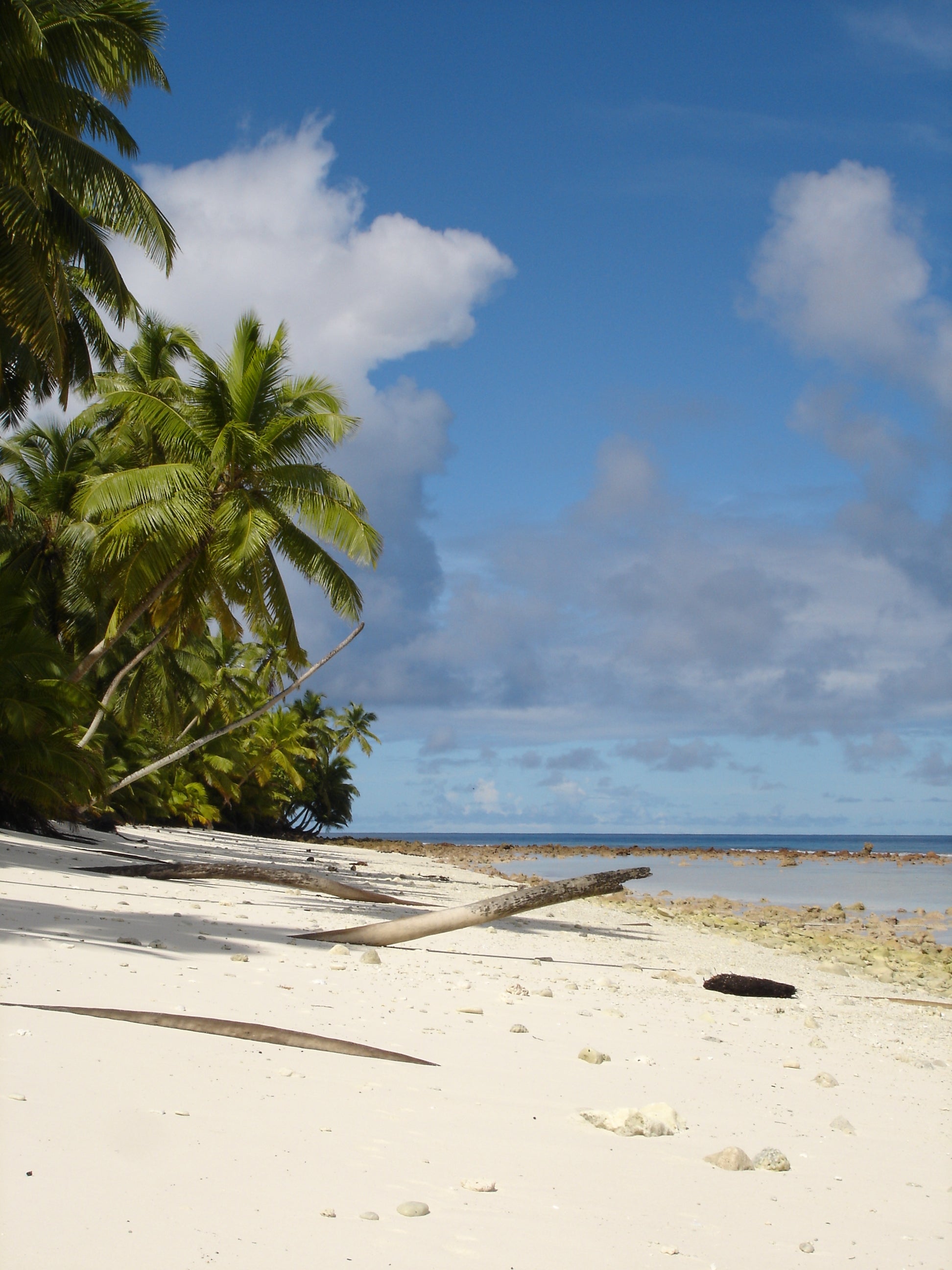
The study area in the Chagos Archipelago in the remote Indian Ocean provides a living laboratory to compare marine ecosystems around islands with and without rats.
Researchers have conducted years of studies looking into the effects of invasive rats on marine ecosystems from how the changes in nutrient flows affect the growth of corals to the territorial behaviour of fish species.
Now this latest study is one of the first to reveal changes to the small cryptobenthic fish and the species that prey on them, offering surprising new insights for the study team.
“Contrary to our expectations, the low-nutrient conditions that rats create do not negatively affect all reef organisms,” said Laura-Li Jeannot, lead author of the study and PhD researcher at Lancaster University. “Nutrient-loss impacts are not uniform. There are winners and losers.”
The researchers believe that fish have a number of competitive advantages when seabird nutrient flows remain intact.
Cryptobenthic reef fishes are characterized by extraordinarily high rates of growth and reproduction. As a result, they have high nutrient and energy requirements, and those can be matched in nutrient-rich environments. This allows these fish populations to flourish and expand in favourable conditions – such as seabird-fertilized reefs.
Population expansion likely drives habitat colonisation, that would be otherwise be occupied by cryptic invertebrates, such as crabs and shrimp.
“Beyond chasing invertebrates away from their homes, the fishes also outcompete them for food: our results show that cryptobenthic fish, when more abundant, likely drive invertebrates to seek alternate, less preferred resources.”
On the flip side, the researchers believe that the main reason behind invertebrates’ relative success near rat-infested islands comes from being relieved of the competitive pressure from cryptobenthic fishes, which are much less abundant in nutrient-poor reefs. Invertebrates’ lower metabolic rates could also be an advantage in lower nutrient environments as they don’t require as much nutrients to sustain a certain level of biomass.
Given the position of cryptobenthic fish and invertebrates near the bottom of the coral reef food chain, researchers expect big impacts on the rest of the food web.
While very little is known about the role of cryptic invertebrates in wider reef productivity, cryptobenthic fish have been estimated to contribute up to 60% of total consumed biomass on coral reefs, so they are highly important for nutrient and energy cycling on reefs.
The researchers found that mixed carnivorous fish rely more on cryptobenthic fish in seabird environments, and that the productivity of fish-eating predators soars while invertebrate-eating predators productivity stagnates near seabirds.
Dr. Simon Brandl from The University of Texas at Austin’s Marine Science Institute and co-principal investigator of the study provided additional insight “Cryptobenthic fish are a nutrient-dense, protein-packed, highly digestible resource for predators; on the other hand, much of invertebrates’ mass is represented by a tough outer shell that is far less nutrient-rich. As a result, tiny fishes represent a more energetically optimal prey for predators looking for a quick snack near seabird islands.”
Seabird-derived nutrients move through reef food webs primarily via fish, shaping predator communities and overall reef structure, while their loss, often due to invasive species like rats, will shift energy pathways toward invertebrates and fundamentally alter ecosystem function. These results have important conservation implications: safeguarding seabirds and their nutrient subsidies is also a way to safeguard the integrity of reef food webs.
The findings are detailed in the paper ‘Contrasting cryptofaunal responses to seabird nutrient inputs illuminate coral reef productivity pathways’, which has been published recently by Ecology.
The authors of the study, which received funding from the Bertarelli Foundation and from the National Science Foundation, are Laura-Li Jeannot, Casey Benkwitt and Nick Graham of Lancaster University; Ruth Dunn of Lancaster University and the Centre d’Ecologie Fonctionnelle et Evolutive in France; Simon Brandl and Joyce Velos of the University of Texas; and Gareth Williams of Bangor University.